# What a rogue film school knows about software
Werner Herzog doesn’t think much of film schools. His own is called Rogue Film School, and the homework has almost nothing to do with cinema: read books, travel, learn a manual trade, walk for a few weeks.
The reasoning is blunt. If you’ve only ever watched films, you have nothing to point the camera at. The camera is the easy part.
I think the same thing happens with software, and we talk about it much less.
The part nobody teaches
Learning to write a working service has never been more accessible. A few months of focused effort and you can ship something real. What takes far longer is knowing that a stock count in a warehouse happens at shift change and not at noon, that a nurse writes her notes at the end of the shift and not between patients, that the person filling in your form sees a completely different object than the person who designed it.
That knowledge doesn’t come from documentation. It comes from having been in the rooms where the work happens, or from reading people who have, or from doing some other job for a while.
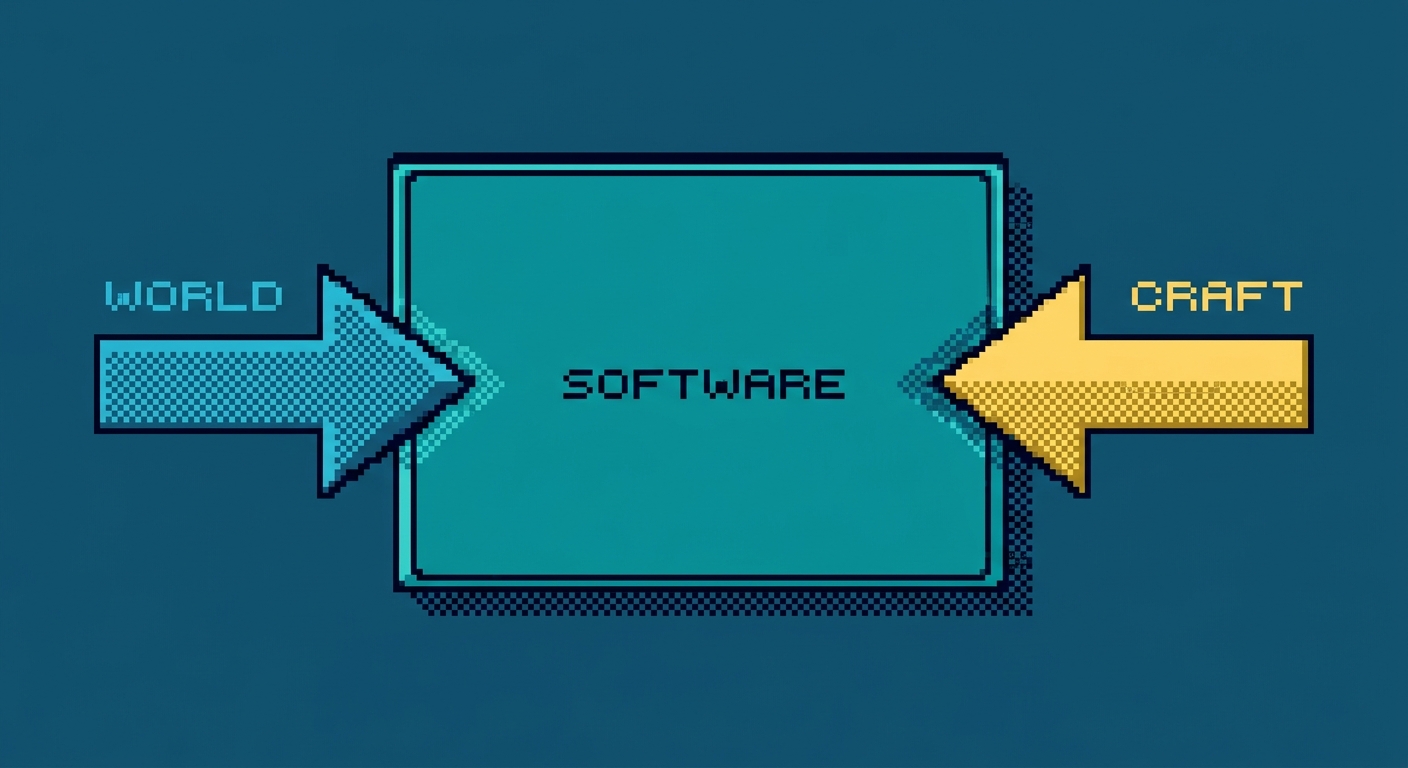
When that knowledge is missing, you can tell from the outside. The software looks like it was built by someone who never asked, and the people who use it can feel it in the first five minutes.
Reading sideways
I keep a reading feed, and these days most of what lands in it isn’t about programming at all. Essays, interviews, fiction, whatever caught someone else’s attention. I’m not organised about it. The point isn’t to extract a lesson from every article, it’s to have something in my head that isn’t another opinion about architecture.
Herzog’s list works the same way for filmmakers. Nothing on it is a film, and everything on it is input for making films.
The practical version of this for engineers is cheap: keep a few sources outside the bubble, and let them sit for a while without trying to turn each one into a blog post. Some of it will show up in the code years later, in a decision you can’t fully justify except that it felt right.
What it means for a team
Here’s the part I find more interesting, and more debatable. A team made only of people who have done nothing but software will model every problem as software. Every complaint becomes a feature request, every messy human process becomes something to automate, and nobody in the room says out loud that the process is messy because of a shift schedule that exists for good reasons.
I’m not claiming a philosophy degree makes anyone a better engineer. I can’t measure that, and I’d be lying if I said I could. What I do notice is that the people who ask the strangest, most useful questions tend to have spent time somewhere else first, and that mix is worth protecting when you hire.
The tradeoff is real, of course. Somebody has to be deep in the tooling, and that depth takes years you can’t spend in a warehouse. You need both, and the balance shifts with the product.
If you have a reading list with nothing about your job on it, I’d love to see it.
Happy hacking!